DashboardBusiness Platform
FRAS AI Attendance System
Role-based Attendance Management with a Face-recognition Workflow
Step 01: 1. Overview
An education-focused attendance project with separate administrator, teacher, and student experiences, attendance-management screens, and an AI face-recognition workflow.
Connecting face-recognition-assisted attendance with the different needs of administrators, teachers, and students.
Area Details Project Education application and attendance prototype Contribution Web interface and attendance-management workflow Status Public application and demonstration inspected FRAS explores an AI-assisted attendance workflow for educational institutions. The project is organized around three distinct experiences: administrators maintain the educational context, teachers work with attendance, and students access their own records.
The live website introduces the product, links to role-specific interfaces, and includes a demonstration of the face-attendance concept. Repository history confirms attendance-management work with filters and detail views.
Step 02: Features
- Administrator, teacher, and student interfaces
- Attendance management
- Record filters and detail views
- Face-recognition attendance workflow
- Public project demonstration video
Step 03: 2. The problem
Replacing a manual roll call does not remove the need for a usable attendance system. A teacher still needs to select the correct class context, review results, and deal with corrections. Administrators and students need different views of the same domain.
The challenge was to present AI assistance within a workflow people can understand rather than treating recognition output as the entire product.
Step 04: 3. Users and responsibilities
User Responsibility Administrator Manage the students, teachers, and courses that define the institution Teacher Work with class attendance and review the resulting records Student Access personal attendance information Step 05: 4. Product workflow
- Select teaching context.
- Capture or provide image.
- Recognition-assisted review.
- Attendance record.
- Role-specific access.
The flow above describes the product journey. The following sections explain the implementation and the boundaries of this case study.
Step 06: 5. Core capabilities
Capability How it appears in the product Role-specific entry Separate administrator, teacher, and student interfaces Attendance records Attendance-management screens with filters and details Education context Student, teacher, and course-management presentation Face-recognition workflow A demonstrated attendance concept built around images Public explanation Features, role tours, and a demonstration video Step 07: 6. Implementation and architecture
The web repository uses Next.js, JavaScript, and Tailwind CSS. Its contribution to the case study is the product shell and attendance-management interface. The published demonstration adds context about how face recognition fits the attendance task.
The role split is the important design boundary: institutional management, class-level attendance, and individual visibility should not be forced into one screen. A clear interface for each role helps keep navigation aligned with the task.
The available evidence does not establish a model-training pipeline, recognition benchmark, anti-spoofing implementation, or production biometric-storage design. Those should be documented separately before making reliability or privacy guarantees.
Technology stack
Layer Technology Web framework Next.js and React Language JavaScript Styling Tailwind CSS Product demonstration Embedded face-attendance demonstration video Step 08: 7. Engineering and product decisions
Decision Reason Role-specific screens Keep each user focused on the part of attendance they own Reviewable attendance Make records and details a visible product concern Class context Tie the attendance experience to the relevant teaching context Demonstration alongside explanation Show how the concept works rather than relying only on feature text Step 09: 8. Trade-offs and current scope
Recognition output can be wrong. A deployable attendance product needs review and correction rules, a clear identity-enrollment policy, appropriate access controls, and documented treatment of image data. These are evaluation concerns, not claims of completed safeguards.
The case study avoids unsupported recognition-accuracy figures and production-scale claims.
Step 10: 9. What I learned
AI assistance becomes useful when it is part of a reviewable workflow. The interface around the recognition result matters as much as the ability to detect a face.
Step 11: Project links
Keep exploring
View all projects Related projects

Full Stack · Dashboard
WeTrainEducation & Tech
A unified enterprise solutions platform for business growth
Next.js · TypeScript · Tailwind CSS · shadcn/ui
Full Stack · Fintech
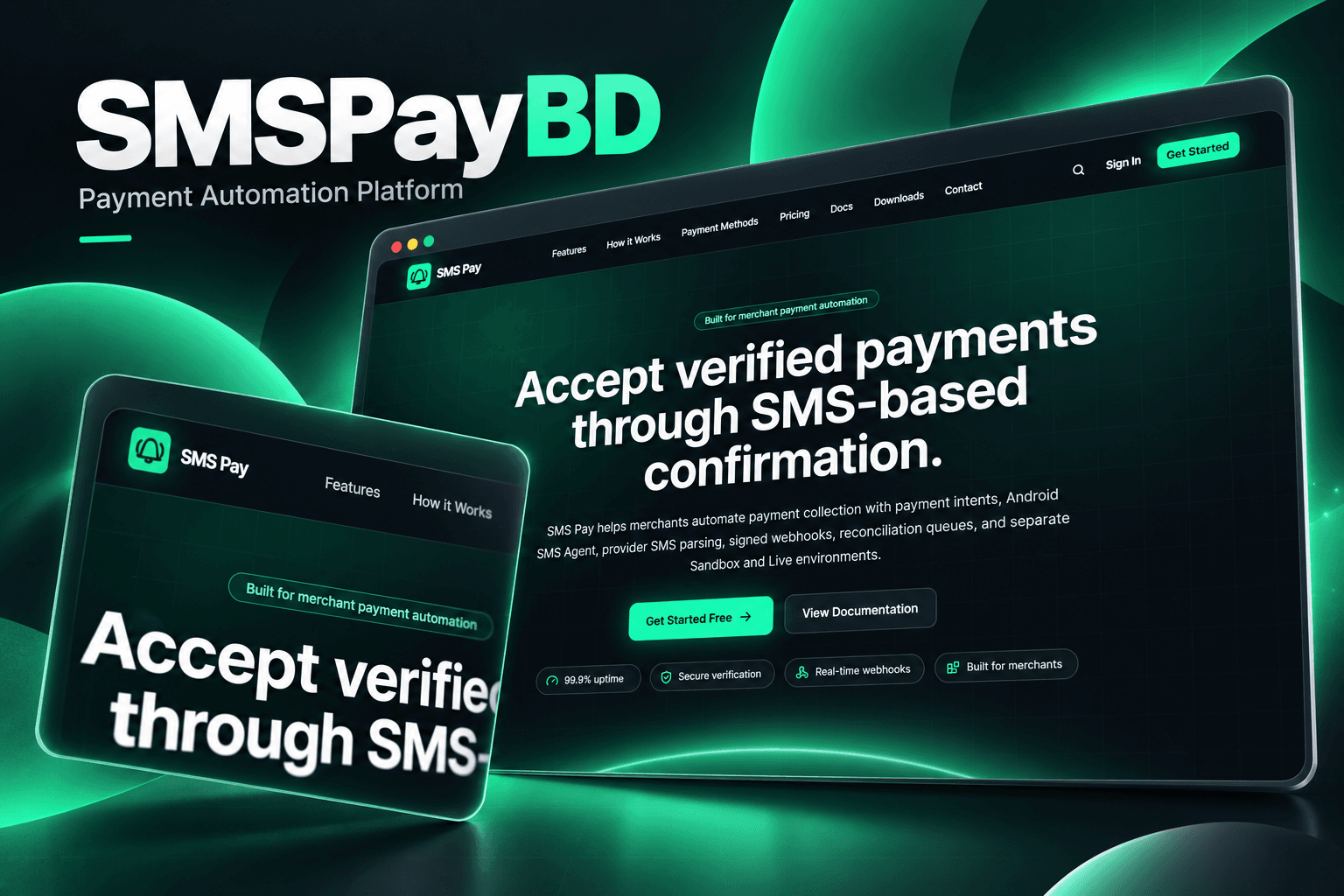
SMSPayBD
Multi-tenant SMS Payment Reconciliation Platform
Next.js · NestJS · TypeScript · PostgreSQL

Business Platform · Fintech
TopXPay
Fintech Marketing Website with Lead Capture
Next.js · React · TypeScript · Framer Motion
 Newsletter
Stay in the Loop
Occasional emails about new projects, blog posts, and what I'm building - no spam.